
Closing the Confidence Savings Gap
Insights into how much confidence people really have about savings and financial products

Welcome to Raisin UK’s Closing the Confidence Savings Gap report, a research-led look at how much confidence people have when managing their money, understanding financial products and making decisions about saving.
Nearly half of women don't feel confident understanding financial products. Raisin UK's new research of over 2,000 Brits reveals that financial confidence varies significantly by gender, age and income - highlighting a Confidence Savings Gap that could influence how people save, compare products and make money decisions.
Working with experts* from Raisin UK, Accountant She, The Money Charity and Women’s Wealth, we explore what the Confidence Savings Gap looks like in real life, why it matters, and what could help people feel more informed.
To accompany this report, we hosted a webinar designed to help people understand the Confidence Savings Gap and discuss simple, actionable steps that can help people feel more informed when making money decisions.
What is the Confidence Savings Gap?
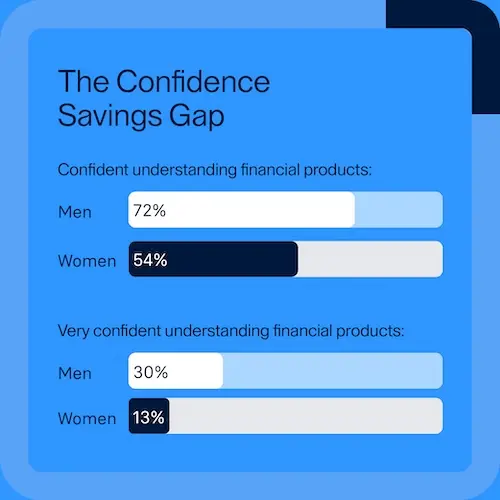
The Confidence Savings Gap describes the difference in how confident different groups feel when understanding savings accounts and financial products. Raisin UK's research found 72% of men feel confident compared with 54% of women.
Raisin UK coined the term following research among more than 2,000 UK adults which found confidence varies significantly by gender, age and income.
Our research suggests confidence is shaped by a number of factors including financial language, access to trusted information and life circumstances.
About the research
The Confidence Savings Gap research surveyed 2,002 UK adults in May 2026, exploring confidence around savings, financial products and money decisions. Responses were analysed by age, gender, income and household circumstances.

Expert insight - Robyn Demming, UK B2C Lead, Raisin UK
“The Confidence Savings Gap is not just about who has more money. It is about who feels able to understand financial products, compare options and make informed decisions. Our research shows that clearer information and more accessible conversations could play an important role in helping people feel more confident about their savings.”
Key findings at a glance
Men are more likely than women to feel confident understanding financial products, at 72% compared with 54%.
Only 13% of women say they feel very confident understanding financial products, compared with 30% of men.
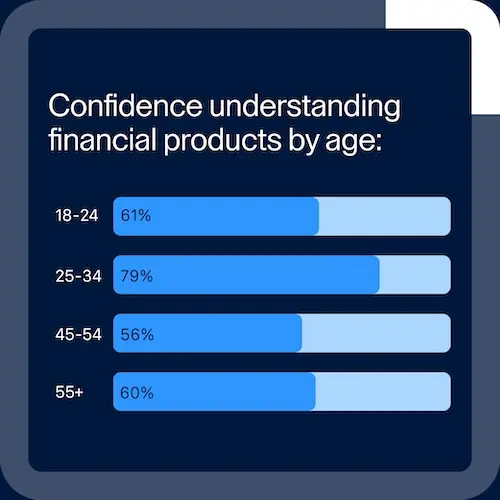
Adults aged 25 to 34 are the most likely age group to feel confident understanding financial products, at 79%.
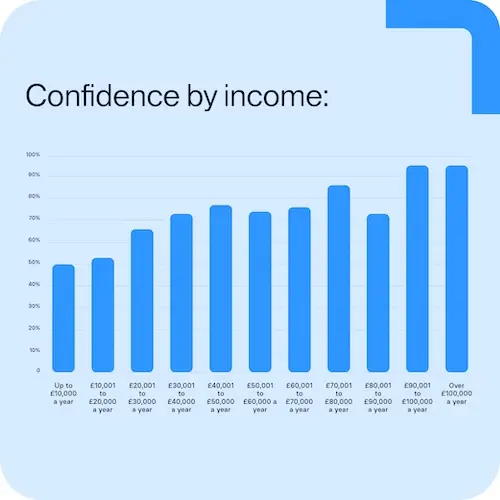
Those earning £55,001 or more are almost twice as likely to feel confident as those earning £15,000 or less, at 86% compared with 49%.
Cost-of-living changes are the biggest trigger causing people to rethink how they save or invest, cited by 44% of adults.
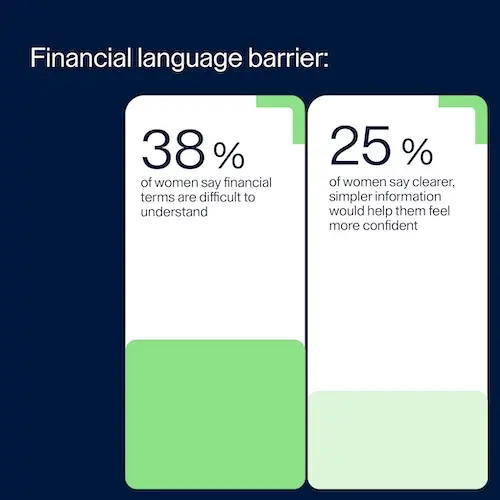
A quarter of adults say clearer, simpler information would help them feel more confident.
What impacts the confidence gap?
Confidence in making financial decisions can shape how people engage with their money. It can affect whether someone feels able to compare products, understand key terms or ask the right questions before making a decision.
Raisin UK’s research found a clear gender confidence gap. Almost three quarters (72%) of men say they feel confident understanding financial products, compared with just over half (54%) of women.
The gap becomes even more pronounced when looking at those who feel “very confident”. Almost a third (30%) of men say they feel very confident understanding financial products, compared with just 13% of women.
What this means
One of the most striking findings from the research is that the Confidence Savings Gap appears to be driven less by ability than by confidence, clarity and access to understandable financial information.
The Confidence Savings Gap is as much about clarity as it is knowledge. When financial products are explained in a way that feels complicated or inaccessible, people may feel less comfortable asking questions, comparing rate or terms, or making informed savings decisions.
What you can do
Start with the basics. Our savings guides explain common savings terms and account types, like interest rates, fixed term and FSCS protection, in a clear, simple way to help you feel more confident understanding financial language.
Does age affect savings confidence?
The Confidence Savings Gap is not only visible by gender. Age and income also appear to play an important role.
Adults aged 25 to 34 are the most likely age group to feel confident understanding financial products, at 79%. Confidence is lowest among 45 to 54-year-olds, at 56%, while 60% of over-55s say they feel confident.
What this means
Confidence does not automatically increase with age or life experience. There are many factors that could play a role in this, including access to financial information. Younger people tend to be more digitally native, and recent years have seen a rise in new sources of financial information, from Finfluencers to FinTok, where creators share money tips and personal finance explainers on social media.
At the same time, more traditional places to access information, such as bank branches, have been closing. This could be making it harder for some people to find support in the way they are used to or feel most comfortable with.
The findings suggest that people may need clearer savings information in different formats at the various stages of life, particularly when financial responsibilities become more complex or priorities start to shift.
What you can do
Review your savings when your life stage changes, whether that is starting work, buying a home, having children or approaching retirement. A quick check can help you see whether your current ways of savings suit your goals as they change throughout your life.
Does income affect financial confidence?
Income creates one of the clearest divides. Among those earning £55,001 or more, 86% say they feel confident understanding financial products. This falls to half (49%) among those earning £15,000 or less.
Those with a personal income of more than £100,000 are the most confident group overall, with the majority (94%) saying they feel confident understanding financial products.
While the research does not prove that higher income causes greater confidence, it does point to a clear link between income, financial headroom and perceived understanding.
What this means
Income may give people more financial headroom, but confidence is also shaped by exposure, experience and how easy financial information is to understand. For lower earners, the savings confidence gap risks becoming another barrier to making informed decisions, particularly when everyday budgets are already under pressure.
What you can do
Even small amounts can work harder in the right place. Compare whether your savings are sitting in a competitive account and whether your current rate is keeping pace with inflation.

Expert insight - Sam Secomb, chartered financial planner and director at Women’s Wealth
“Many women I speak to are earning well but still feel underinformed, and often carry an undeserved sense of shame about not knowing more. A lot of confidence comes from understanding what is safe, what is protected and what choices are available, so reducing jargon and friction is key to helping women feel more intentional with their money.”
What makes people feel less financially confident?
Confidence making money decisions does not exist in isolation. It is often shaped by what is happening in people’s day-to-day lives, including cost-of-living pressure, disposable income and major life events.
What causes people to rethink how they save or invest?
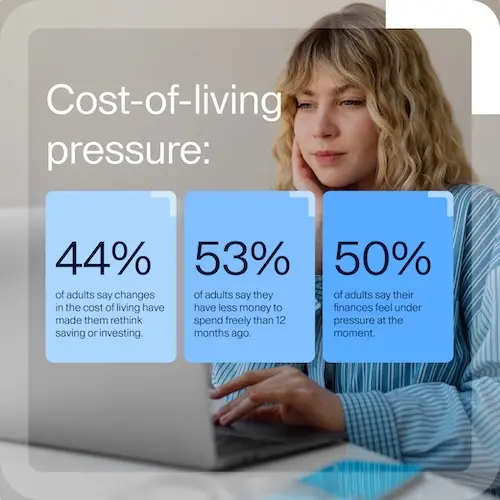
Our research found that changes in the cost of living are the biggest trigger causing people to rethink how they save or invest. More than two in five (44%) adults say the cost of living has made them rethink their approach, ahead of other major milestones such as approaching retirement, having children or buying a home.
More than half (53%) of UK adults also say they have less money to spend freely than they did 12 months ago. Half (50%) also say their finances feel under pressure at the moment.
For many people, the challenge is not simply whether they want to save more. It is whether they have enough headroom, clarity and confidence to make decisions while everyday costs remain high.
What you can do
Building an emergency fund can help create a buffer when costs rise or unexpected bills appear. Our guide explains what to consider.
Small costs, for example on unused subscriptions can quietly add up. Review where your money is going to see if there is spare cash that could be working harder for you in a competitive account.
What this means
Cost-of-living pressure can make long-term planning feel harder, even when people know saving is important. When disposable income is squeezed, clear information matters even more because people may have less room to recover from decisions they do not fully understand.
Where are people turning for financial information?
People are influenced by a wide range of voices when making financial decisions, from family and friends to banks, financial advisers, comparison websites, media and social platforms.
But our research shows there is a difference between who influences people and who they trust.
Who influences financial decisions?
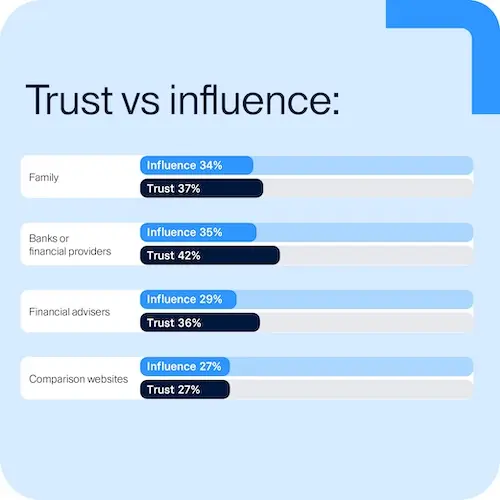
Family is one of the strongest sources of influence, with a third (34%) saying family influences their financial decisions a great deal or quite a lot. A slightly higher proportion, two in five (37%), say they trust family a great deal or quite a lot for financial advice.
Banks and financial providers also play an important role, with over a third (35%) saying they influence their financial decisions, while 42% say they trust them.
36% of adults trust financial advisers but only 29% are influenced by them, suggesting that their expertise is valued but not necessarily accessed directly.
The research also revealed a gender split when it comes to trusting sources of information. Women tended to be more sceptical of external sources, suggesting women are more inclined to critically assess whether or not to trust information, for example, from a money-saving expert or price comparison website, whereas men are perhaps more likely to take risks when acting on financial advice.
Overall, the findings suggest that people are piecing together financial understanding from different places. That makes clear, credible and easy-to-understand information even more important.
What this means
People are not relying on one single source for financial information. They are building their understanding from a mix of family, providers, advisers, comparison websites and online content. This makes trust, transparency and plain-English explanations essential when people are trying to understand financial products explained in a way that feels practical.
What you can do
Before acting on financial information, check the FCA Register to help you understand whether you are reading general guidance or speaking to someone authorised to provide advice.

Expert insight - Rhiannon Byers, director of adult financial wellbeing programmes at The Money Charity
“Building the understanding needed to make confident money decisions happens over time, but people need the right information, language and support to do this. If someone feels shut out by jargon, they are less likely to engage, which is why making financial information clearer and more accessible is an important part of improving financial wellbeing.”
What could help close the gap and help people feel more confident?
- 32% say having more money available to invest.
- 25% say clearer, simpler information would help.
- 23% say guidance or advice from an expert would help.
- 23% say better understanding of potential returns would help.
- 20% say speaking to someone in person would help.
The findings point to a simple but important issue: people do not just need more information. They need information that is easier to understand, easier to compare and easier to apply to their own circumstances. For some, this may mean clearer explanations of savings accounts. For others, it may mean knowing when guidance, regulated advice or further support could be useful.
What this means
Closing the Confidence Savings Gap means reducing the friction that stops people from engaging with their money. Clearer information, expert voices and practical savings guidance could help more people feel able to ask questions, compare options and make decisions with greater confidence.
What you can do
Money confidence can feel overwhelming. Start with one simple action first: read one savings guide, check your current savings rate, or compare your existing account with other options available and build your confidence from there.
What are practical ways to build savings confidence?
Getting your finances in order can feel overwhelming, especially when household budgets are under pressure. But money confidence does not have to come from knowing everything. It can start with understanding the basics, asking clearer questions and knowing where to find reliable information.
Some people may find it helpful to think about:
- what they are saving for
- whether they need access to their money
- how different savings accounts work
- whether their savings are keeping pace with inflation
- what level of emergency fund could help them feel more secure
- when they may need regulated financial advice
Raisin UK has a range of savings guides designed to make common savings topics easier to understand, including how emergency funds work, how inflation can affect savings, and how different types of savings accounts compare.
The information on this page is for general information only and does not constitute financial advice.
Watch the webinar: Closing the Confidence Savings Gap
To accompany the Closing the Confidence Savings Gap report, Raisin UK hosted a webinar with expert panellists exploring why some groups feel less financially confident , what barriers sit behind that, and what simple questions people can ask to help them make savings decisions.
Our expert panel included:
- Robyn Demming, UK B2C lead / country head, Raisin UK
- Rachel Harris, founder of Accountant She
- Rhiannon Byers, director of adult financial wellbeing programmes at The Money Charity
- Sam Secomb, chartered financial planner and director at Women’s Wealth and Moral Money columnist at The Telegraph
Robyn Demming
Robyn heads up the growth and management of the Raisin platform in the UK, ensuring we offer our customers a broad range of competitive savings products to help consumers meet their financial goals. Robyn is known for bringing a clear and practical perspective to discussions about personal finance, saving strategies, and market trends. With a wealth of experience in financial services and relationship management, Robyn combines strategic insight with a passion for empowering savers.

Rachel Harris
Rachel is one of the leading financial experts of her generation and the founder of @accountant_she and striveX®, a seven-figure modern accounting firm. Revolutionising the world of accounting, Rachel has generated a following of more than 380,000 across multiple platforms, bringing exponential growth to her multi million-pound group of companies. Featured by Forbes, ITV This Morning and LBC, Rachel is widely respected for translating complexity into action - helping audiences understand not just what to do with money, but how to lead, scale, and build sustainably.
Sam Secomb
Founder of Women’s Wealth, an innovative unbiased financial advice and coaching service that specialises in empowering women to create fabulous financial futures for themselves. Sam is an award-winning adviser on a mission to democratise unbiased financial advice for women, both as investors and as financial planners. Highly qualified, with decades of experience, a columnist for The Telegraph and fuelled by HRT, she’s on a mission to change things up for women regarding finance.
Rhiannon Byers
Rhiannon oversees The Money Charity’s Financial Wellbeing work with adults in workplace and community settings. Before moving to the third sector, Rhiannon worked at the Financial Conduct Authority, ensuring that customers of the UK’s banking, credit and debt sectors were treated fairly. Rhiannon is passionate about breaking down taboos around money and helping build individuals’ Financial Capability, regardless of background, alongside advocating for structural change to the UK financial system and society.
Explore more savings guides
Financial confidence often starts with clearer information. You can explore more guides from Raisin UK below.


Frequently asked questions
What is the Confidence Savings Gap?
The Confidence Savings Gap refers to differences in how confident people feel understanding savings and financial products.
Why did Raisin UK commission this research?
Raisin UK commissioned the research to understand what affects savings confidence and what could help people feel more informed.
Who took part in the research?
The research surveyed 2,002 UK adults aged 18+ in May 2026.
What did the research find about gender and confidence?
The research found that 72% of men feel confident understanding financial products, compared with 54% of women.
Why do women have lower financial confidence?
Raisin UK’s research suggests women are more likely to find financial terms difficult to understand, which may affect confidence.
How does income affect confidence with savings?
Those earning £55,001 or more are more likely to feel confident understanding financial products than those earning £15,000 or less.
How does the cost of living affect savings confidence?
Changes in the cost of living have made 44% of UK adults rethink how they save or invest.
What affects money confidence?
Money confidence can be shaped by income, age, cost-of-living pressure, access to trusted information and how clearly financial products are explained.
What would help people feel more confident?
Clearer information, expert guidance and better understanding of potential returns were all selected as things that could help confidence.
What are financial products?
Financial products are products designed to help people manage, save, borrow or invest money, such as savings accounts, ISAs, pensions, loans and investments.
How much should I have in an emergency fund?
The right emergency fund amount depends on your income, outgoings and circumstances. Raisin UK’s emergency fund guide explains what to consider.
How can I protect savings from inflation?
Understanding the relationship between inflation and interest rates can help you see whether your savings are keeping pace. Raisin UK’s inflation & interest rates explained page can help you build a clearer picture on this.
How can I become more confident with savings?
Understanding your savings goal, how much access you need and how different savings accounts work can help you feel more informed.
Does financial confidence improve with age?
Not always. Raisin UK’s research found adults aged 25 to 34 were the most likely to feel confident understanding financial products.
Does financial jargon stop people saving?
It can be a barrier. Raisin UK’s research found 38% of women say financial terms are difficult to understand.
What is savings confidence?
Savings confidence is how comfortable someone feels understanding savings options, comparing accounts and making informed decisions about money.
Where can I compare savings accounts?
You can compare savings accounts through Raisin UK, including fixed rate bonds, notice accounts and easy access savings accounts.
How can Raisin UK help me?
Raisin UK gives you access to a range of competitive savings accounts from our UK partner banks. Simply register for a Raisin UK Account to apply for free today.
Where can I find more help and information?
For more information about your Raisin UK account, savings products, deposits and withdrawals, visit our Help Centre.
Methodology
This research is based on a comprehensive survey of 2,002 UK adults aged 18+, conducted in May 2026. The survey covered various aspects of savings confidence, including how people understand savings and financial products, what influences their money decisions, and the barriers that can affect how informed and in control they feel of their finances.
For journalists
Useful resources for journalists:
- Download the raw data here
- Download the infographics here
- For further commentary from our expert Robyn Demming, contact pressoffice@wearejam.agency

About us
Savings accounts
Guides
About us
Savings accounts
Guides
All interest rates displayed are Annual Equivalent Rates (AER), unless otherwise explicitly indicated. The AER illustrates what the interest rate would be if interest was paid and compounded once a year. This allows individuals to compare more easily what return they can expect from their savings over time.
Raisin UK is a trading name of Raisin Platforms Limited which is authorised and regulated by the Financial Conduct Authority (FRNs 813894 and 978619). Raisin Platforms Limited is registered in England and Wales, No 11075085. Registered office: Cobden House, 12-16 Mosley Street, Manchester M2 3AQ, United Kingdom. The information on this website does not constitute financial advice, always do your own research to ensure it's right for your specific circumstances. Tax treatment depends on the individual circumstances of each customer and may be subject to change in the future.