
Compare savings accounts
- Rates up to 4.50% AER (02/2026)
- Access a range of savings accounts with competitive interest rates.
- Manage multiple savings accounts with a single login. No paperwork, no fees.
- Eligible deposits are protected up to £120,000 per person, per bank by the Financial Services Compensation Scheme (FSCS).

Home › Savings accounts
View and compare all savings accounts

1. Register for a free Raisin UK Account
Create your free Raisin UK Account in minutes.

2. Choose and apply for a savings account
Compare fixed rate bonds, easy access accounts and notice accounts.
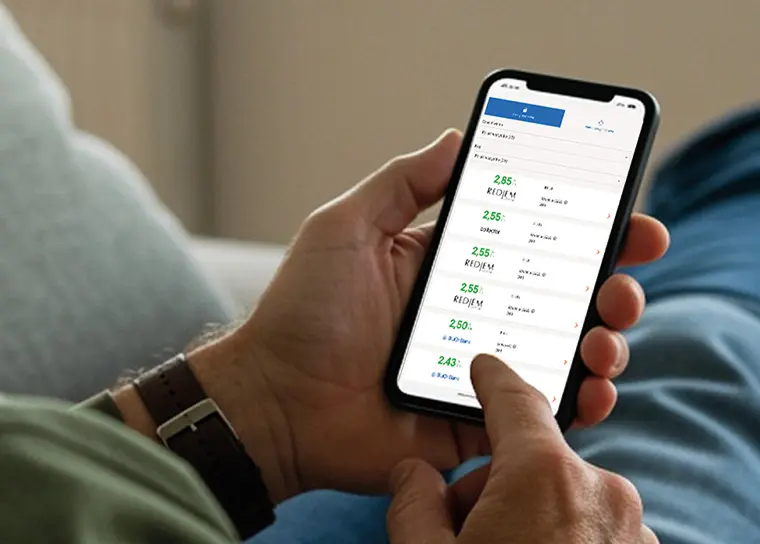
3. Fund your account
Transfer your deposit from your Nominated Account to your chosen account.
Key takeaways
Comparing savings accounts can help you find interest rates that meet your goals and preferences.
Choose between fixed rate bonds, easy access savings accounts, and notice accounts.
Eligible deposits with partner banks are protected up to £120,000 per person, per bank under the FSCS (or European equivalent).
March savings accounts update: what’s new?
Updated: 19.03.2026
On 19 March 2026, The Bank of England’s Monetary Policy Committee (MPC) voted to hold the Bank Rate, which can affect the rates offered by savings providers, at 3.75%. The next review is due on 30 April 2026.
The top savings account on our marketplace currently pays 4.50% AER.
Want to stay up-to-date with the latest offers and news on savings and notice accounts each month?
Sign up
What types of savings accounts are available on Raisin UK?
There are several types of savings accounts available in the UK, each designed to work in a different way. Understanding how they differ can help you compare savings accounts to determine which option fits your saving plans.
In this section, we’ll talk you through some of the most popular savings accounts in the UK, including easy access savings accounts, fixed rate bonds and notice accounts.
Fixed rate bonds
A fixed rate bond is a savings account where you ‘lock’ your money away for a set term. You can’t withdraw your money but the interest rate is fixed for the duration of the term, meaning it does not change even if interest rates move up or down. Fixed rate bond terms typically last for between one year and five years, though shorter and longer terms are available.
Compare fixed rate bonds
Easy access savings
Easy access savings accounts allow you to withdraw your money whenever you need it (although some banks may set minimum withdrawal limits), making them a common option for emergency funds or short-term savings goals. Easy access interest rates are typically variable, which means they may rise or fall depending on a variety of wider economic factors.
Compare easy access savings accounts
Notice accounts
Notice accounts give you the option to withdraw your money by giving your savings provider a set ‘notice’ period, typically between 30 to 95 days. They can be useful when you know you will not need immediate access to your savings but still want some flexibility.
Compare notice accounts
How to choose the best savings account for you
You can narrow down the best savings account for you by answering a few simple questions. Remember that you can hold multiple savings accounts; many people choose to deposit their money across different types of savings products for their different needs.
Open a Raisin UK Account
What are your savings goals?
To help compare savings accounts, here’s an overview of which account types best match some of the most common savings goals.
Account type | Pros | Cons | Common uses |
Easy access savings accounts | Quick access to your money | Variable interest rates may rise or fall depending on wider economic factors | Emergency funds, short-term savings goals |
Notice accounts | May offer a slightly higher interest rate than easy access | Access requires advance notice | Planned expenses with a set date |
Fixed term bonds | Often offers higher interest than other savings account types, protects against drops in interest rates | No access to your funds until the end of the term (unless stated otherwise in the product terms) | Longer-term savings goals |
How much money do you have now?
Your opening deposit can influence which type of account you choose.
Many financial experts suggest building an emergency fund first. This is typically held in an account with instant access, so funds are available if needed.
Your short-to-mid-term savings goals may be best served by an account that balances access and interest, while money you can comfortably live without (even in an emergency scenario) could be placed into a high interest fixed rate bond.
FSCS deposit protection covers up to £120,000 per person, per bank. If you plan to deposit more than that, you may wish to spread your money across multiple banks.
How much do you want to save?
If you have an overall savings goal of over £120,000, saving across multiple accounts with different banks can help you stay within FSCS deposit protection limits.
You may want to consider tax on saving accounts too. As of 2025/26, the UK personal savings allowance for basic-rate taxpayers is £1,000 (£500 for higher-rate taxpayers). While ISAs allow you to save tax-free, this tax-free status only applies to a yearly allowance of £20,000.
Compare savings accounts with Raisin UK
Savings rates can vary widely across the UK, so comparing savings accounts can make a meaningful difference. Raisin UK brings together a broad range of savings products from partner banks, making it easier to compare savings accounts (including interest rates and account features) in one place.
All savings accounts available through Raisin UK are offered by partner banks and are protected under the Financial Services Compensation Scheme, or the relevant European deposit protection scheme, up to £120,000 per person, per bank institution.
Once you’ve found an account that suits you, simply log in or register for a Raisin UK Account online or via our app, and follow the steps to apply for your chosen account. If you have any questions, our Customer Service team will be happy to help.
Open a Raisin UK account
Your savings accounts questions answered
What is a savings account?
A savings account is an account where you deposit money and earn interest on it. The amount of interest you earn depends on the type of account you choose and the interest rate offered.
Different savings accounts work in different ways, so it’s important to understand your options before applying.
How do savings accounts work?
When you open a savings account, you deposit your money with your chosen bank. In return, they’ll pay interest based on your balance and the account’s annual equivalent rate (AER) and the way the bank calculates interest.
You can find out more about how to open a savings account on our savings guides hub.
Who can open a savings account?
Every savings account has its own terms and conditions regarding who can open an account and with what amount, but savings accounts in the UK are generally available to those aged 18 or over. Unless you already have an account with the provider, you may need to provide some form of ID and proof of address too.
Parents and guardians can open a children’s savings account or a Junior ISA on their child’s behalf, but any money deposited into the account belongs to the child.
What is a good interest rate on savings?
The most obvious metric to determine a ‘good’ interest rate is how high it is in comparison with others, but other factors such as access, notice periods and term lengths are as important when determining the suitability of a savings account.
For example, getting the highest rate may require you to lock your money away for a long time. Comparing savings account features alongside interest rates can help you find an option that works for you.
What can you use a savings account for?
People use savings accounts for many reasons. Sometimes, someone will open a savings account just to earn interest on their money. Other people may have more specific goals in mind, including:


Find out more about savings accounts

Als Pionier für Spar-, Investment- und Altersvorsorgeprodukte ermöglichen wir Privatkunden einen unkomplizierten Zugang zu globalen Einlagen- und Kapitalmärkten – ein Vorteil, der auch Finanzinstitute stärkt.
About us
Savings accounts
Guides
About us
Savings accounts
Guides
All interest rates displayed are Annual Equivalent Rates (AER), unless otherwise explicitly indicated. The AER illustrates what the interest rate would be if interest was paid and compounded once a year. This allows individuals to compare more easily what return they can expect from their savings over time.
Raisin UK is a trading name of Raisin Platforms Limited which is authorised and regulated by the Financial Conduct Authority (FRNs 813894 and 978619). Raisin Platforms Limited is registered in England and Wales, No 11075085. Registered office: Cobden House, 12-16 Mosley Street, Manchester M2 3AQ, United Kingdom. The information on this website does not constitute financial advice, always do your own research to ensure it's right for your specific circumstances. Tax treatment depends on the individual circumstances of each customer and may be subject to change in the future.