
How the Bank of England base rate affects your savings
Find out what the relationship is between base rates and savings rates, and how you can still work towards your financial goals in a changing economic environment.

Key takeaways
: Interest rates tend to move in the same direction as the Bank of England base rate
Fixed rate bonds lock in an interest rate, while easy access and notice accounts offer variable rates that can fluctuate
: Do fixed or variable rates suit your saving strategy? Find a range of options with Raisin UK
How are base rates and interest rates linked?
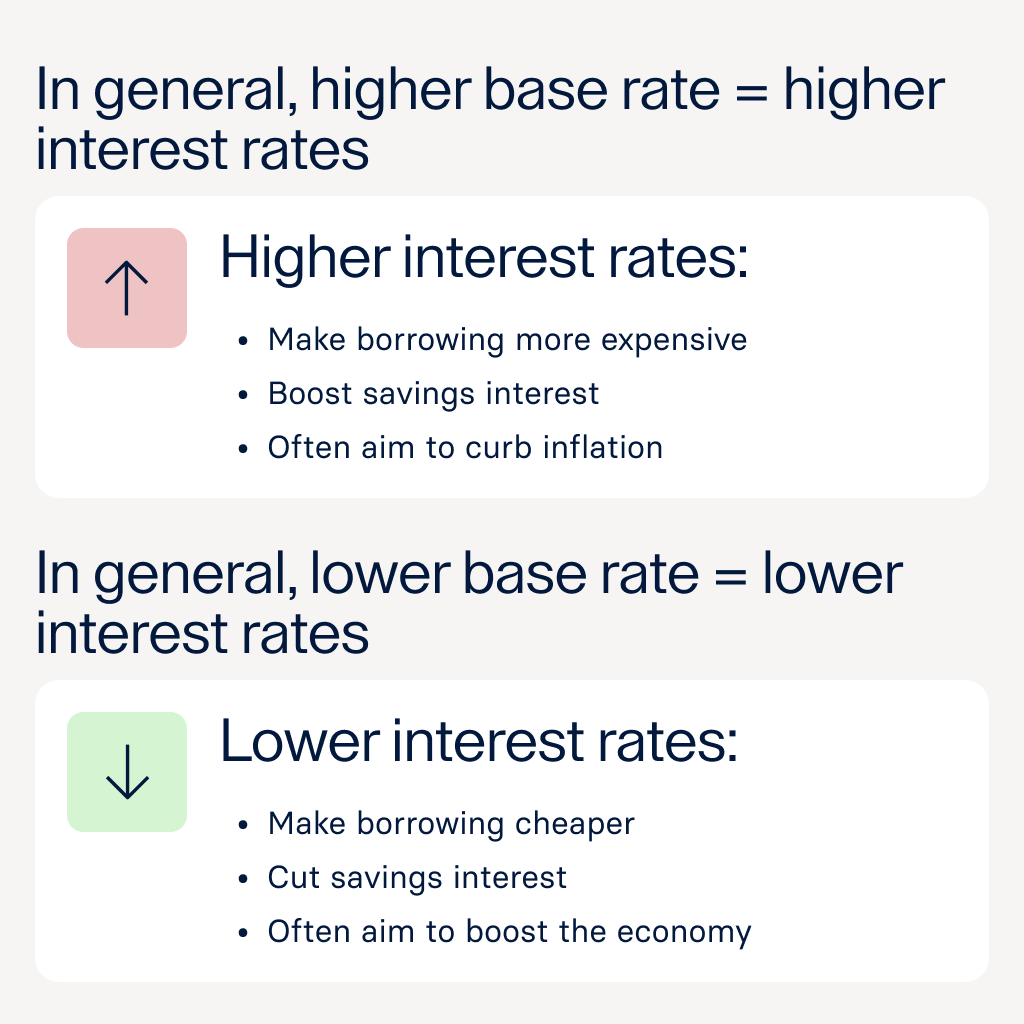
The Bank of England base rate is the central interest rate set by the Monetary Policy Committee and it directly influences other interest rates, like the ones on your savings accounts. In general, a higher base rate means higher interest, which can make products like loans and mortgages more expensive, but gives you the opportunity to earn more on your savings. And on the other hand, when base rates fall, other interest rates tend to fall as well.
Market context: In September 2026, the Bank of England base rate remained at 3.75%. With UK inflation gradually flattening, the base rate has been on hold since late 2025, providing more savings rate stability. The next base rate decision is scheduled for 5 November 2026.
How are interest rates decided on savings accounts?
The Bank of England base rate serves as a key benchmark for banks and building societies, but they are free to set their own interest rates. As well as the base rate, they will consider factors like:
- Funding requirements to support lending activities
- Competitor offerings
- Supply and demand
This means that even if the base rate remains fixed, you might still see banks adjusting their interest rates to attract new deposits or manage their balance sheets.
How the BoE base rate impacts different types of savings account
There are two types of rates you will see when choosing a savings account: fixed and variable.
- A fixed rate remains the same for a set period of time, which will be indicated when you open the account.
- A variable rate can move up or down at any time while the account is open. These movements will often be linked to Bank of England base rate changes.
In general, fixed rates are offered on account types where you lock your money away for longer, like a fixed rate bond. Variable rates are tied to more flexible savings accounts, like easy access savings accounts or notice accounts.
When interest rates change on your account, you will be given advanced notice and can choose to withdraw your funds if you would like.

Are you paying the price for loyalty?
You may love your bank, but you could earn more interest elsewhere.
Secure competitive rates whatever your strategy
Whether you want to ride out rate volatility, keep your cash close to hand or find a balance between the two, Raisin UK offers a single platform to help you manage your money.
Rates displayed are current as of 27.09.2026 and subject to change prior to account opening.
Lock it in: fixed rate bonds
Savers choose fixed rate bonds when they want a predictable return over a set period. The interest rate is locked in so returns are shielded if the Bank of England lowers the base rate during your term.

Wait and see: easy access savings accounts
You can keep cash available for life’s unexpected expenses, and remain flexible if interest rates rise or fall and you want to move your money.

The middle ground: Notice accounts
If you don’t need instant access to funds but don’t want to commit to a multi-year fixed term, notice accounts offer a smart compromise. They often provide slightly higher variable rates than easy access accounts, and you will need to give advanced notice before withdrawing funds.

Frequently asked questions: How the Bank of England base rate affects your savings
Are my savings safe when moving them to an account offering higher interest?
When searching for the best returns, you might come across smaller challenger banks offering highly competitive rates. Make sure the bank is regulated so that eligible deposits will be protected up to £120,000 per bank, per depositor with the Financial Services Compensation Scheme (FSCS).
How quickly does a base rate change affect interest rates?
When the Bank of England announces a change, variable savings rates typically adjust within a few weeks, though each bank will decide its own timeline. Fixed rate accounts remain completely unaffected during their term.
Should I wait for rates to change before saving?
Trying to time the market can mean missing out on earning interest. A balanced approach might involve spreading your savings across both fixed and variable accounts to blend stability with flexibility.
Save smarter with the Raisin UK newsletter!
What’s in it for me?
Receive updates on the latest interest rates
Ensure you never miss a bonus offer
Keep your finger on the pulse with the latest financial news

About us
Savings accounts
Guides
About us
Savings accounts
Guides
All interest rates displayed are Annual Equivalent Rates (AER), unless otherwise explicitly indicated. The AER illustrates what the interest rate would be if interest was paid and compounded once a year. This allows individuals to compare more easily what return they can expect from their savings over time.
Raisin UK is a trading name of Raisin Platforms Limited which is authorised and regulated by the Financial Conduct Authority (FRNs 813894 and 978619). Raisin Platforms Limited is registered in England and Wales, No 11075085. Registered office: Cobden House, 12-16 Mosley Street, Manchester M2 3AQ, United Kingdom. The information on this website does not constitute financial advice, always do your own research to ensure it's right for your specific circumstances. Tax treatment depends on the individual circumstances of each customer and may be subject to change in the future.