
Savers in Ireland losing out on a combined €3bn as inflation erodes value of their funds
This works out at about €1,500 per household, according to Raisin
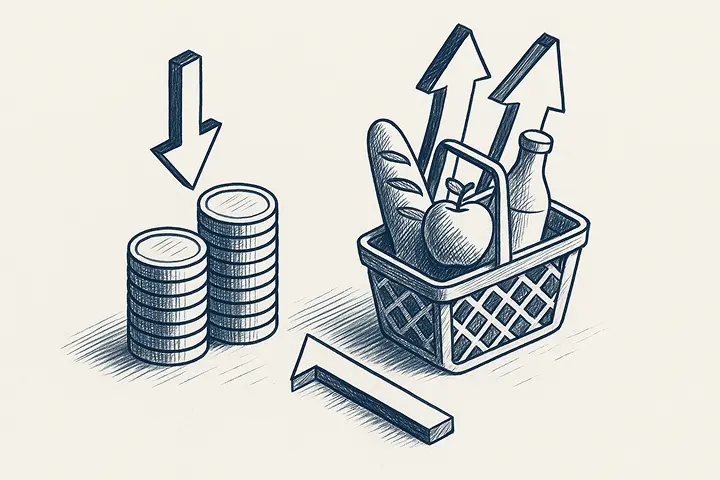
Savers in Ireland are losing billions of euro because inflation is eroding the value of their funds.
New research has estimated that the combined loss for savers is around €3bn.
They are losing out by keeping savings in low-yielding accounts and ones that are not paying any interest at all, according to a study carried out by digital bank Raisin, a German-based digital savings platform that connects Irish savers with high-interest deposit accounts.
Raisin said the €3bn being eroded from the value of savings works out at €1,500 per household, although many Irish households have no savings at all.
Interest rates paid on demand deposit accounts remain low in this country and have not moved in recent months, with an average of just 0.13pc.
However, term deposits, where money has to be left in the bank for a set period to get a given interest rate, have more competitive interest rates, Raisin said.
Savers in Ireland are losing billions of euro because inflation is eroding the value of their funds.
New research has estimated that the combined loss for savers is around €3bn.
They are losing out by keeping savings in low-yielding accounts and ones that are not paying any interest at all, according to a study carried out by digital bank Raisin, a German-based digital savings platform that connects Irish savers with high-interest deposit accounts.
Raisin said the €3bn being eroded from the value of savings works out at €1,500 per household, although many Irish households have no savings at all.
Interest rates paid on demand deposit accounts remain low in this country and have not moved in recent months, with an average of just 0.13pc.
However, term deposits, where money has to be left in the bank for a set period to get a given interest rate, have more competitive interest rates, Raisin said.
The amount put into term deposits has grown recently by about €2.5bn, Raisin said.
Raisin country head for Ireland, Eoghan O’Hara, said active savings behaviour made a difference, which sees people moving money to get better rates.
“Better offers are now available, the onus is on the saver to look around”
The study estimates that once the impact of inflation is accounted for, the average household with savings lost around €730 in purchasing power on demand deposits and over €800 on current accounts last year.
However, savers who chose a one-year term deposit at an average of 2.28pc at the end of 2024 earned around 17.5 times more interest last year than the average demand deposit saver.
Mr O’Hara said: “Savings behaviour will be decisive in 2026. Better offers are now available and actively comparing rates will matter more than European Central Bank (ECB) policy.”
Inflation continued to erode purchasing power.
The most recent figures from the Central Statistics Office show inflation was at 3.2pc in the year to November, its highest level in almost two years.
Raisin said the monthly average for last year works out at 2.15pc.
But with demand deposit rates in Irish banks stuck at low levels of roughly 0.13pc (annual equivalent rate) on average, the real return on readily accessible savings fell to about -2pc.
“Applied to the estimated volume of demand deposit savings held by Irish households, this equates to a substantial loss of purchasing power, corresponding to roughly €730 per household over the year,” Raisin said.
“With roughly the same volume in deposits held in no-interest current accounts, households lost an additional €810 on these savings.”
On the other hand, Irish savers who locked in their money at the start of the year benefited materially.
A saver who invested €10,000 in a one-year term deposit at a top rate of 3.05pc Aer at the end of December 2024 earned €305 in interest before taxes in 2025.
By comparison, an average demand deposit saver, even with monthly compounding, earned only around €13, or over 23 times less, Raisin said.
Mr O’Hara said savings rates are likely to remain largely unchanged in the coming year.
“If ECB policy rates remain stable, doing nothing will continue to mean falling behind,” he said.
He said better offers are certainly now available, particularly for those willing to compare across providers and who are open to using term deposits to protect their savings from inflation.

Company & team
Savings accounts
Information
Company & team
Savings accounts
Information
© 2026 Raisin Bank AG, Frankfurt a.M.

All interest rates displayed are Annual Equivalent Rates (AER), unless otherwise explicitly indicated. The AER illustrates what the interest rate would be if interest was paid and compounded once a year. This allows individuals to compare more easily what return they can expect from their savings over time. Raisin Bank, trading as Raisin, is authorised/licensed or registered by BaFin (Bundesanstalt für Finanzdienstleistungsaufsicht) in Germany and is regulated by the Central Bank of Ireland for conduct of business rules.