
Guinness Index 2026
Pint purchasing power slips ahead of St Patrick’s Day as €6 becomes the new normal
Every year, Raisin Bank tracks one of the most important inflation indicators for publicans: pint purchasing power. The Guinness Index 2026 shows a dip after last year’s rebound.
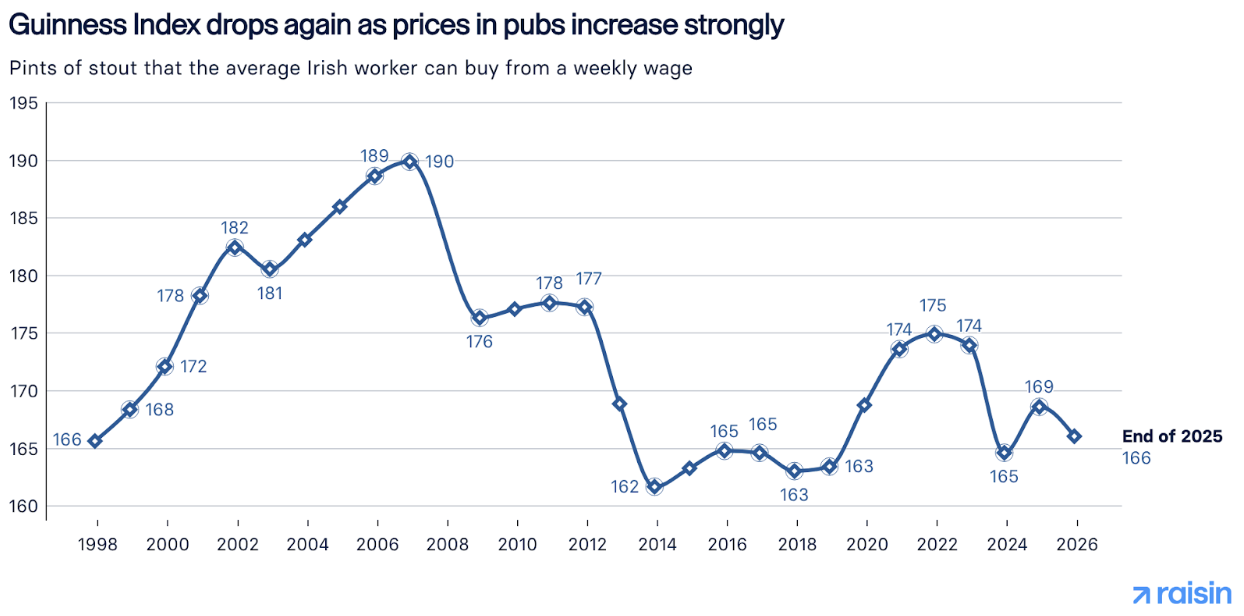
The number of pints the average Irish weekly wage can buy has fallen to 166 in 2026. While wages continued to rise modestly, the cost of a pint of stout in a pub seems to have definitively crossed the €6 mark, tipping the balance back against drinkers and underscoring the growing squeeze on the cost of a night out.
Guinness Index: Peak pint power becomes distant memory
The longer-term trend shows just how far pint purchasing power has fallen from its peak. The Guinness Index remains far below its mid-2000s peak of 190 pints and has now slipped back to its 1997 level of 166. While still above the post-crisis low of 162 in 2014, the latest drop in pint power suggests that past highs are increasingly out of reach.
Pub prices rise nearly twice as fast as take-home cans since 2012
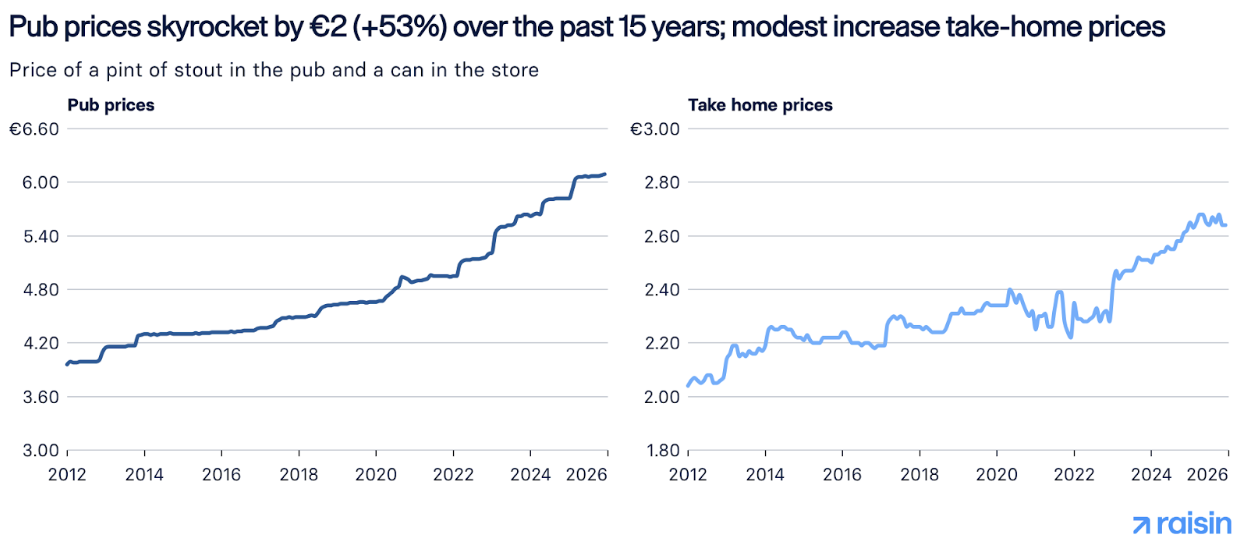
Pub prices have risen far faster than take-home stout over the past decade. Since March 2012, the average price of a pint in pubs has increased by around 53%, climbing from €3.98 to €6.09. Over the same period, the price of a take-home can has risen by just 28%, from €2.07 to €2.64. This disparity highlights how the cost pressure has been felt most sharply by pubgoers than stay-at-home-drinkers.
Pints feel more expensive than everything else: what does the data say?
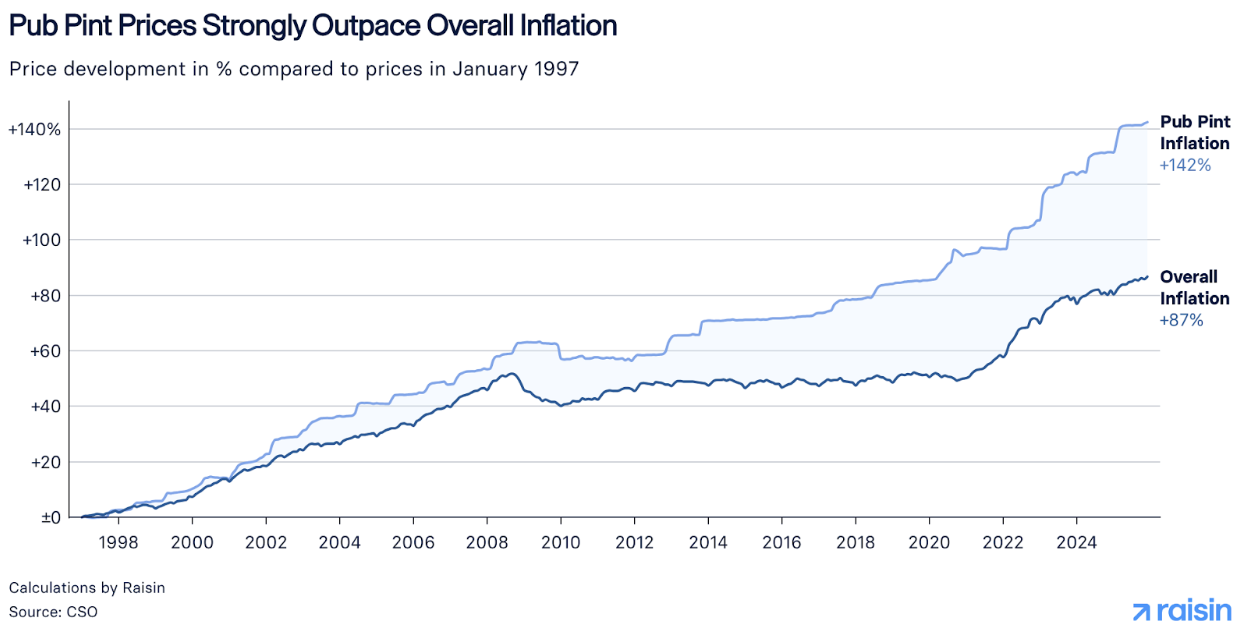
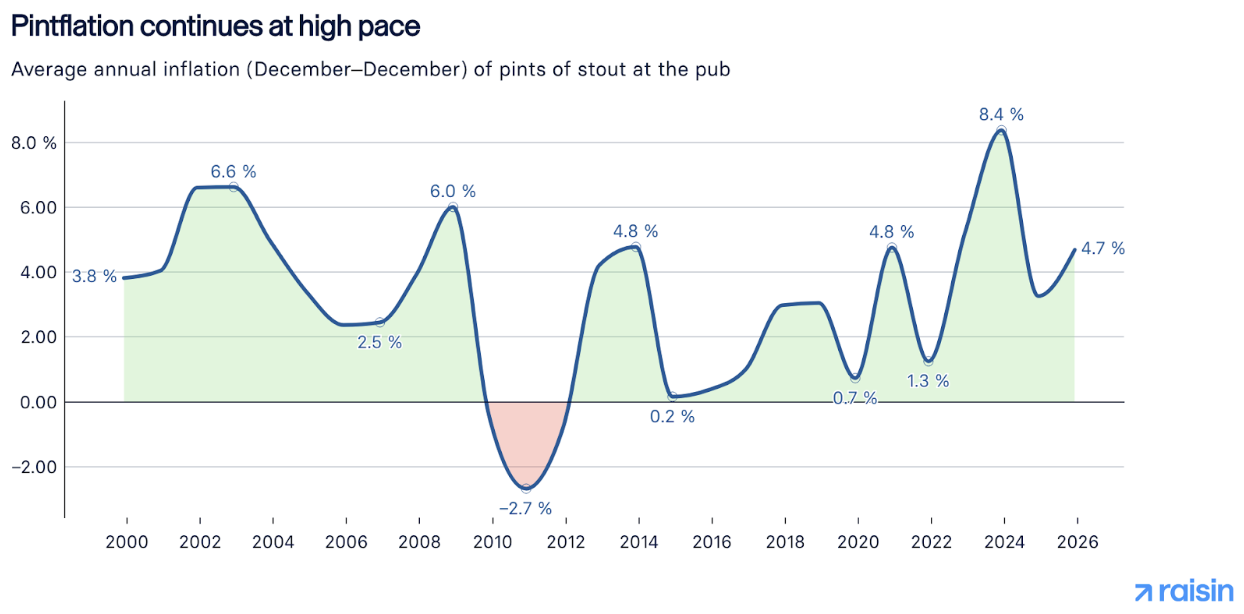
Have pints at the pub really gotten more expensive than everything else? The data suggests they are. Since the end of January 1997, the price of a pint of Guinness in Irish pubs has risen by around 140%, up from €2.51 to €6.09, compared with roughly 87% growth in overall consumer prices. This long-running gap shows that pub pints have consistently become more expensive than the average cost of living, helping explain why pint purchasing power remains under pressure despite rising wages.
Daragh Curran, aka The Guinness Guru, says: “If a pint’s setting you back six euro or more, there are no excuses. Let it settle, wait for the top-up, and make sure it’s poured with a bit of pride. Life’s too short for rushed Guinness. A great pint is still one of life’s simple pleasures, and when you find a proper one, it reminds you exactly why it’s worth it.”
Eoghan O’Hara, Country Head Ireland of Raisin, adds: “While the cost of a pint has clearly moved ahead of wages over the past decades, the bigger picture is about making money work a little harder. Small financial habits, from budgeting better to earning more on savings, can help offset rising everyday costs. The Guinness Index is a reminder that even modest changes can make a real difference to how far people’s pay goes, both at the bar and beyond.”
About the index
The Irish Central Statistics Office (CSO) collects data on wages and prices and tracks historical developments. A pint of draught stout at a bar is one of the components of the Consumer Price Index. Historical data from 1997—2026 was collected from the current and historical CSO Databases (CPM04/CPM08/CPM12). Data on average weekly wages in Ireland was collected from the current and historical databases of the CSO (EHQ08/QIMA1). Inflation data from database CPM03. Calculations and graphs by Raisin Bank. Prices before the introduction of the euro converted at the fixed exchange rate as of 1 January 1999.
About Daragh Curran: https://www.instagram.com/daraghcurran__/
Daragh Curran, aka The Guinness Guru (33), has been creating content online around pubs & pints since 2019. He has visited over 300 pubs across Ireland and beyond and has been sampling Guinness along the way. As a self-confessed “clueless expert”, Daragh has a passion for hunting down a top-quality pint of Guinness and has documented the journey across his social media platforms.
About Raisin
Raisin is the world's leading platform for savings and investment products. Founded in 2012, the FinTech connects consumers with banks in the EU, the UK and the US. This gives consumers better interest rates and banks a diversified form of refinancing. Our vision is to offer savings and investments without barriers and thus open up the global 160 trillion euro market. Raisin currently employs more than 700 people from over 75 countries worldwide. Today, the platform holds over 80 billion euros in assets from more than one million investors which have accrued over 5 billion euros in returns.

Company & team
Savings accounts
Information
Company & team
Savings accounts
Information
© 2026 Raisin Bank AG, Frankfurt a.M.

All interest rates displayed are Annual Equivalent Rates (AER), unless otherwise explicitly indicated. The AER illustrates what the interest rate would be if interest was paid and compounded once a year. This allows individuals to compare more easily what return they can expect from their savings over time. Raisin Bank, trading as Raisin, is authorised/licensed or registered by BaFin (Bundesanstalt für Finanzdienstleistungsaufsicht) in Germany and is regulated by the Central Bank of Ireland for conduct of business rules.