

BluOr Bank
3.35 %AER
How your phone or smart device can replace your physical purse or wallet
Digital wallets are apps that store your payment information, letting you tap your mobile device to pay. They are becoming increasingly popular in Ireland, making up over half of all contactless payments in the first half of 2025*. But how exactly do they work, and what should you know before using one? On this page, we answer common questions, exploring the different types of digital wallets, their advantages, and security considerations.
*https://www.ifsc.ie/news/almost-60-of-contactless-payments-in-shops-restaurants-and-other-retail-outlets-were-made-using-mobile-wallets-rather-than-cards-in-first-half-of-2025
Digital wallets securely store debit or credit card details on your device, letting you pay without cash or physical cards
Digital wallets are often open, allowing you to use them anywhere, but they can also be closed or semi-closed and only usable at select retailers
While convenient and secure thanks to encryption, factors to consider include device compatibility and whether you can link your bank card
The information provided here is for informational and educational purposes only and does not constitute financial advice. Please consult with a licensed financial adviser or professional before making any financial decisions. Your financial situation is unique, and the information provided may not be suitable for your specific circumstances. We are not liable for any financial decisions or actions you take based on this information.
A digital wallet, also known as a mobile wallet, online wallet, electronic wallet, or e-wallet, is an app or online service that lets you securely store your payment information on a digital device. Instead of carrying physical debit cards or credit cards around with you, you can use your phone or smartwatch to make payments whenever you see the contactless sign.
Electronic wallets can also store digital versions of loyalty cards, public transport passes, boarding passes, event tickets, and gift cards (provided the wallet accepts them). Usage is becoming increasingly common, with recent data* showing that almost 454 million mobile wallet payments were made in Ireland in the first half of 2025, up nearly 20% on the same period in 2024.
Digital wallets securely store your credit card or debit card details and billing addresses in protected software. This financial information is encrypted, which means it’s coded to help prevent hackers from accessing it. And when it comes to paying, your card number is never revealed to the merchant because it’s replaced with a unique code in a process called tokenisation.
When you use a digital wallet in a shop, you can sign in and quickly make purchases with just a click or tap. This typically requires authentication, so you might need to provide a PIN, fingerprint, or facial recognition. Electronic wallets might use NFC (near field communication), which allows your device to communicate wirelessly with payment terminals when they’re placed close to each other.
When you shop online or in apps, the same wallet passes on your payment information digitally so you don’t have to type in your card details each time.
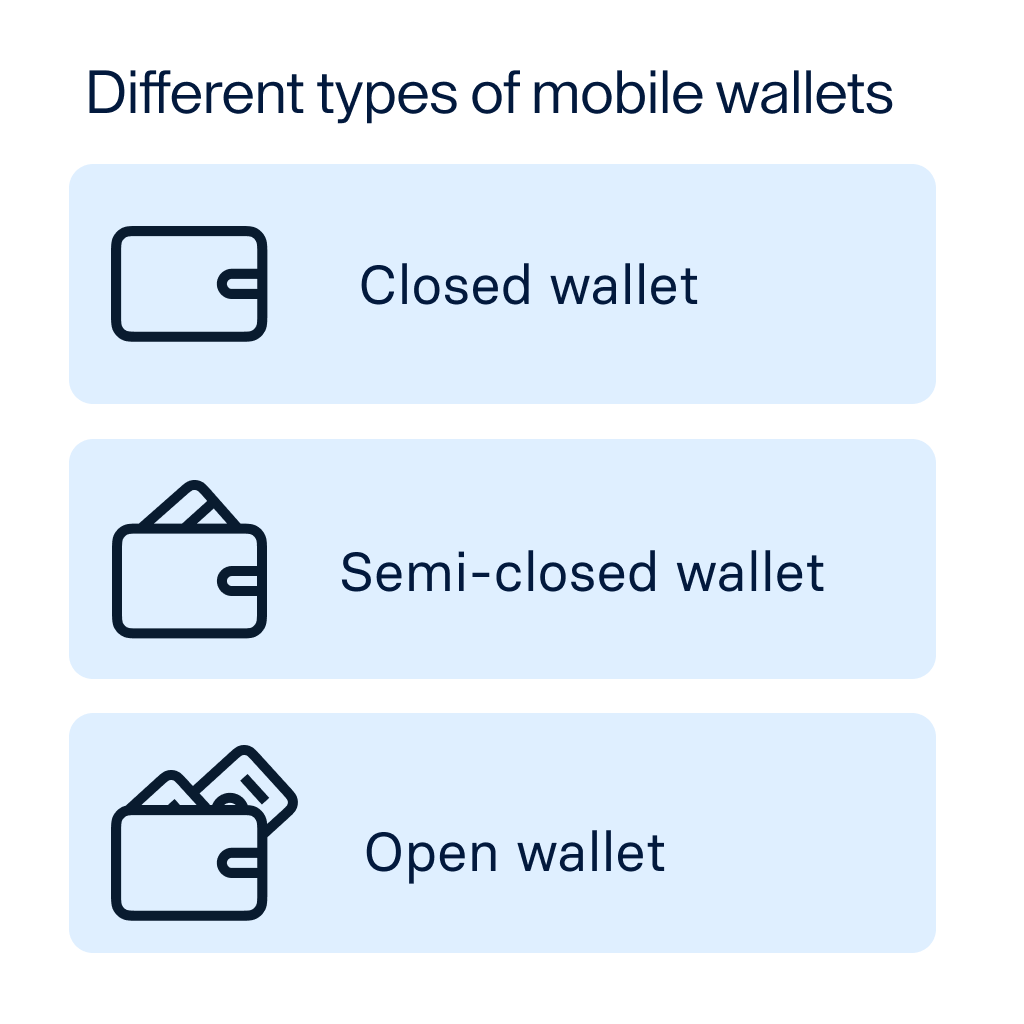
Digital wallets come in three main types in Ireland: closed, semi-closed, and open. Each type offers different levels of flexibility depending on where and how you want to pay.
Closed digital wallets: Closed wallets are issued by specific companies and can only be used for purchases with that company or at affiliated locations. Amazon Pay is an example of a closed digital wallet that you can only use within Amazon stores. It means that shoppers can pay directly using systems enabled by open banking, and aren’t redirected to a third party payment service.
Semi-closed digital wallets: These wallets let you make payments at multiple retailers within a defined network. They aren’t tied to a single company but are accepted by a group of businesses partnered with the wallet provider. They tend to be less commonly used in Ireland than open wallets like Apple Wallet or Google Wallet.
You can’t usually use an e-wallet to store official identity documents, but this is set to change. Ireland is taking part in the EU’s Digital Identity Wallet initiative, which will let people keep digital versions of important documents like their birth certificate or driving licence on their smartphones, and share them as verified ID. The Government Digital Wallet is due to become available to citizens and residents by the end of 2026.
The following steps refer to using open wallets like Google Wallet or Apple Wallet, but the exact process can vary depending on your device. Not all devices support contactless payments, so it’s worth checking whether you have NFC on yours (if you want to use tap to pay).
Download the digital wallet app on your smartphone or smartwatch. You might find a wallet app is already installed. If not, you can download it from the app store.
Add your payment card. You can either enter the card details manually or use your phone’s camera to scan your bank card.
Verify your card with your bank. You may need to enter a one-time code sent by SMS or approve the card setup in your mobile banking app.
This depends on the type of digital wallet you use. PayPal is one example that requires you to have a bank account. With other options like Google Wallet, you’re not directly linking an account within the app, but you’re still using a debit or credit card to fund any contactless payments, and these are generally connected to a bank account.
Similarly, closed digital wallets allow you to link debit or credit cards, but they aren’t intended as a place to store money. The idea is simply to make it quicker and easier to pay with the given retailer. Semi-closed digital wallets may or may not need a linked bank account – it depends on the provider. Many let you top up with a bank card or bank transfer.
So, while it is possible to use some types of digital wallets without having a bank account set up in the app, it depends on the wallet’s features and how you plan to use it.
No need to carry a physical wallet or multiple cards; all payment methods in one place. | Requires a smartphone, tablet, or smartwatch; won’t work if your device battery dies. |
Contactless payments make it quick and easy to pay in-store. | Some shops, especially in rural Ireland, may not accept digital wallets. |
Payments are protected with encryption, PINs, or biometric authentication. | Internet connectivity or app glitches can make e-wallets less reliable. |
Detailed transaction histories help you monitor spending and manage your money more effectively. | Not all debit, credit, or commercial cards link to every digital wallet. |
Some wallets store loyalty cards, tickets, or gift cards for easy access. | Some personal data may be shared with wallet providers, e.g. your first and last name, in the case of Apple Pay. |
It’s common to question how safe electronic wallets are compared to debit or credit cards. Digital wallets rely heavily on encryption, which means your sensitive information is scrambled and therefore hidden from cashiers and anyone around you. And when you make a contactless payment, your real card number isn’t shared with the retailer. Instead, a token is used for each transaction, which can help to protect your data if a shop’s systems are hacked. Plus, each time you pay, you authenticate the payment by providing your fingerprint, face scan, or PIN. This is a requirement under the EU’s PSD2 rules.
However, like any digital technology, hackers can sometimes try to access accounts, compromising your personal and financial data. Users can help protect themselves by:
using a strong, unique password when setting up your e-wallet
enable biometric authentication (if supported on your device)
keep your device locked or switched off when not in use
monitor your transactions on a regular basis to check for suspicious activity
setting up or allowing a feature enabling you to lock or wipe your device if it’s lost
Read our handy guides to find out more about staying safe online.
The e-wallet you use will often depend on the operating system of your device.
Below is a table of the main digital wallet providers available in Ireland, and their services:
Apple Wallet | iOS and web | Secure payments via Touch or Face ID; supports in-store, online, and in-app purchases; integrates with Apple devices. |
Google Wallet | Android and web | Uses NFC technology for payments; supports fingerprint or password verification; integrates with Google accounts. |
Samsung Pay | Samsung devices and web | Works with Samsung smartphones and smartwatches; supports contactless and in-app payments. |
PayPal | iOS, Android, and web | Supports online payments and money transfers; offers cash-back rewards with select retailers; “Buy now, pay later” option. |
Amazon Pay | iOS, Android, and web | Integration with Amazon accounts; supports online purchases. |
Your smartphone’s operating system often determines your options. For example, Apple Pay is only available on iPhones, iPads and Apple Watches. Similarly, the Google Wallet and Samsung Pay are designed for Android users. It’s important to note that older phone models may not have the NFC technology needed for making contactless payments.
Lastly, it can help to verify the compatibility of your bank card with your preferred digital wallet. Not all personal debit, credit, or commercial cards may integrate seamlessly with every wallet. It’s often worth checking your bank’s website or customer service to check whether they would work.
With the Raisin app, you’re always just a tap away from smarter saving.
Track your savings, view all your accounts in one place, and be the first to hear about latest offers.
Whether you're at home, commuting or travelling, the Raisin app puts your savings in your pocket.
Scan the QR code to download the app and take control of your savings — anytime, anywhere.

© 2026 Raisin Bank AG, Frankfurt a.M.

All interest rates displayed are Annual Equivalent Rates (AER), unless otherwise explicitly indicated. The AER illustrates what the interest rate would be if interest was paid and compounded once a year. This allows individuals to compare more easily what return they can expect from their savings over time. Raisin Bank, trading as Raisin, is authorised/licensed or registered by BaFin (Bundesanstalt für Finanzdienstleistungsaufsicht) in Germany and is regulated by the Central Bank of Ireland for conduct of business rules.
.png&w=3840&q=100)
