

Aareal Bank
2.85 %AER
How to be more sustainable
Sustainability affects how we live, work, and plan for the future — but what does it really mean, and why is it so important? This guide explores the definition of sustainability, its role in business and everyday life, and how it’s being put into practice across Ireland. From global goals to local examples, it shows how thoughtful choices today can help shape a more balanced and resilient tomorrow.
Sustainability is about balancing environmental, social, and economic factors to ensure that future generations can meet their own needs without facing the negative consequences of current decisions
Businesses that focus on sustainability not only reduce their environmental impact, but also strengthen their long-term performance* by meeting the expectations of customers, employees, and investors
Living more sustainably doesn’t require drastic change. Small actions like reducing plastic use, saving energy, and supporting responsible companies can contribute to a more resilient future
The information provided here is for informational and educational purposes only and does not constitute financial advice. Please consult with a licensed financial adviser or professional before making any financial decisions. Your financial situation is unique, and the information provided may not be suitable for your specific circumstances. We are not liable for any financial decisions or actions you take based on this information.
Sustainability refers to the responsible use of environmental, social, and economic resources in a way that maintains their availability over the long term. This approach recognises how closely environmental protection, economic systems, and social structures are connected and how lasting development depends on keeping all three in balance. In simpler terms, sustainability means making thoughtful choices today that protect the things people will depend on tomorrow, such as clean air, safe communities, or stable jobs.
When applied to business, sustainability involves incorporating environmentally and socially responsible practices into core operations. This can include reducing energy consumption, improving supply chain transparency, or supporting community engagement — all while maintaining commercial viability. Businesses that adopt such models aim to operate in a way that is both ethical and future-proof.
The idea of sustainability as a shared global responsibility gained momentum in the late 20th century. In 1987, the United Nations published the Brundtland Report, which first defined sustainable development as “meeting the needs of the present without compromising the ability of future generations to meet their own needs.” This definition remains the foundation of how sustainability is understood today.
Since then, the United Nations has continued to promote sustainability worldwide, encouraging governments, businesses, and individuals to take action on environmental, social, and economic challenges. By embracing sustainability, Ireland and other nations can work towards a future that is both environmentally responsible and economically secure.
Benefits of sustainability include:
Protecting natural resources such as clean water, air, and biodiversity
Reducing harmful emissions and helping to slow down climate change
Supporting long-term economic growth through better, more efficient use of resources
Improving public health by cutting pollution and promoting cleaner living environments
Creating fairer societies by addressing inequality and strengthening communities
Encouraging innovation in green technology, energy, and infrastructure
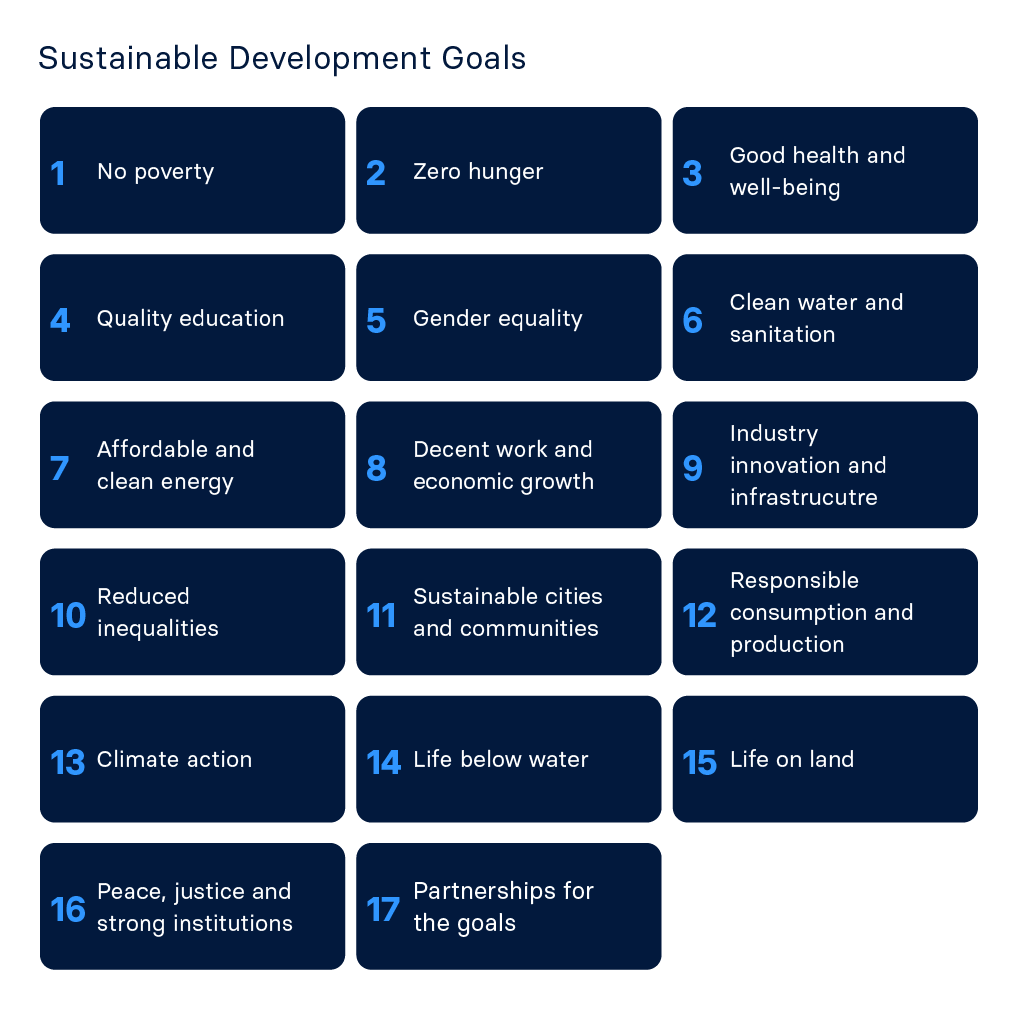
The Sustainable Development Goals (SDGs) are a global framework introduced by the United Nations in 2015 to promote sustainability in all areas of life by 2030. They consist of 17 goals designed to:
End poverty and reduce inequality
Protect the environment and conserve natural resources
Drive economic sustainability and inclusive development
Support climate action, clean energy, and responsible consumption
In Ireland, the government supports the SDGs through a dedicated National Implementation Plan. Key areas include cutting emissions, promoting green enterprise, and strengthening access to education and healthcare. Public bodies, businesses, and communities across Ireland are increasingly aligning their activities with these global goals, understanding that long-term sustainability depends on collective and consistent action.
Sustainability in business means taking responsibility for how a company affects people, the planet, and the economy. It influences the way a business sets its strategies, makes decisions, and carries out its daily operations. Instead of focusing only on short-term gains, sustainable businesses aim to create long-term value. This includes rethinking how products are developed, how resources are used, and how relationships with employees, customers, and communities are maintained.
In Ireland and globally, sustainability has become a key part of how companies plan for the future. It is not just a trend, but a shift in how businesses define responsibility, risk, and long-term growth.
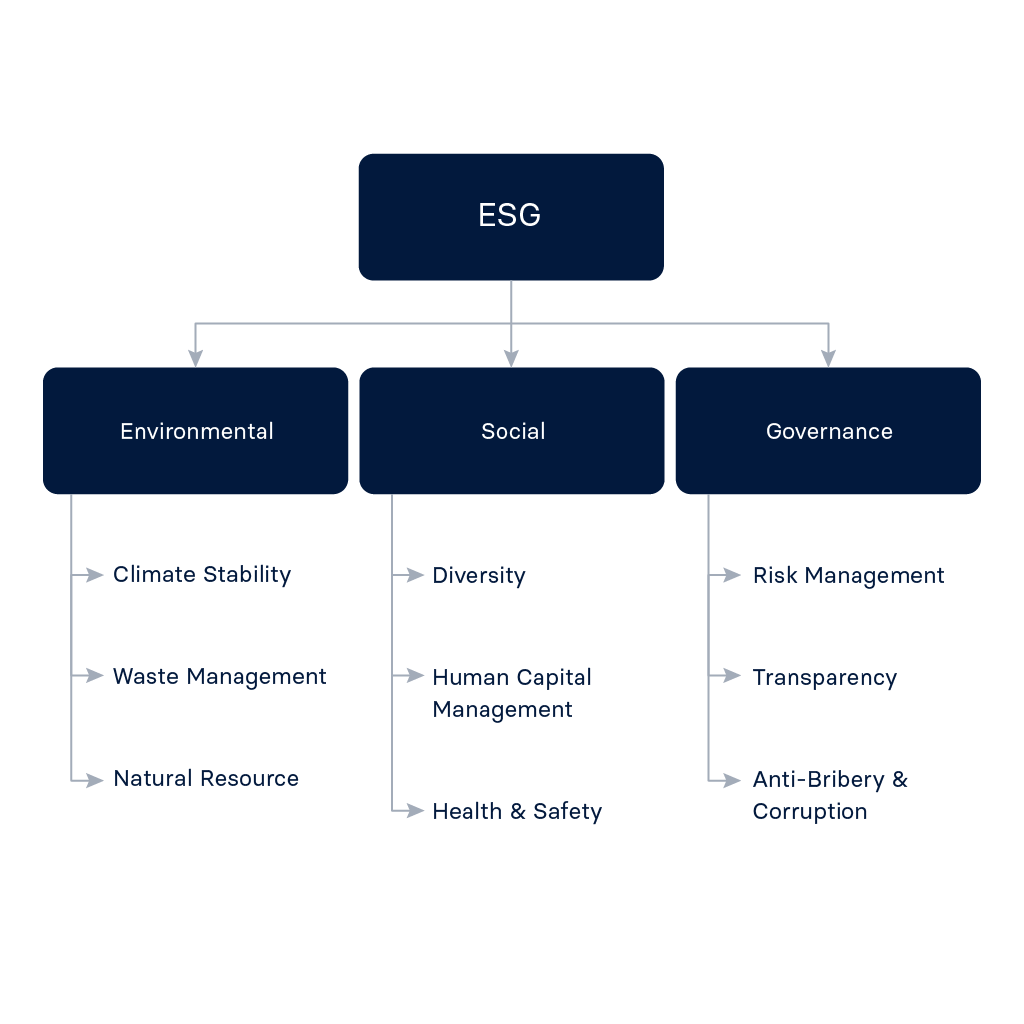
ESG stands for Environmental, Social, and Governance. It is a framework used to assess how responsibly a business operates in relation to the world around it. ESG has become an important part of sustainability in business, guiding how companies manage risk, plan for the future, and build trust with stakeholders.
Each ESG principle focuses on a different area of sustainable performance:
Environmental | A company’s impact on the natural world, including climate, resources, and emissions | Cutting carbon emissions, reducing waste, using renewable energy, improving efficiency |
Social | How a company treats people, both inside and outside the business | Fair wages, safe working conditions, diversity policies, community engagement |
Governance | How a company is managed and how it makes decisions, including ethics and transparency | Strong leadership, clear reporting, anti-corruption policies, responsible tax practices |
Here are three recent Irish examples that show how businesses are putting sustainability into practice:
Circular Computing – Greener IT solutions: Circular Computing has been awarded a €30 million contract to supply up to 60,000 remanufactured laptops to the Irish public sector. This reduces carbon emissions, conserves raw materials, and supports Ireland’s “Buying Greener” policy.
Arigna Group – Biofuel innovation: The Arigna Group has transitioned from coal to producing Harvest Flame, a low-emissions biofuel made from olive pits. This shift supports Ireland’s move away from fossil fuels and promotes the use of renewable energy sources.
For businesses today, sustainability is more than a trend. It’s a strategic priority. It can shape how companies are viewed by customers, employees, investors, and regulators, who increasingly expect responsible and forward-looking practices.
Sustainability supports business success through:
Customer demand: Many consumers prefer products and services that are environmentally and socially responsible and are often willing to pay more for them.**
Employee engagement: According to IBM, staff may be more likely to stay with, or consider joining, companies that reflect their values, including a strong commitment to sustainability.
Operational efficiency: Reducing waste, improving supply chains, and using energy more efficiently can help cut costs and support long-term growth.
Investor interest: Investors increasingly look for companies with clear environmental and social strategies, as these are seen as indicators of lower long-term risk.
What is greenwashing?
In the context of business sustainability, greenwashing refers to when a company overstates or misrepresents its environmental or social effort, often to appeal to consumers or investors. While genuine sustainable practices can build trust and long-term value, greenwashing can harm a company’s reputation and undermine the credibility of real progress.
While sustainability is often discussed on a global or business level, it also has a personal meaning. For individuals, it’s about making everyday choices that reduce harm to the environment, support fairness in society, and help create a stable future.
This might involve simple actions like using less energy, cutting down on waste, choosing locally made products, or supporting businesses that act responsibly. It’s not about being perfect but about being aware and making better decisions where possible.
Living more sustainably doesn’t mean changing your entire lifestyle. It’s more about making small, thoughtful choices that add up over time. Every step you take can contribute to a more responsible and balanced future.
Here are seven simple ways you can get started:
Buy second-hand instead of new: Give clothes, furniture, and electronics a second life by choosing pre-owned items from local charity shops, online marketplaces, or community groups. It helps reduce waste and lowers the demand for new materials.
Reduce plastic use: Opt for plastic-free alternatives such as reusable water bottles, beeswax wraps, or refill stations. Even small swaps in your kitchen or bathroom can make a big difference.
Explore ethical investment options that support environmental or social goals. Many platforms now offer ESG-focused funds that align with your values.
Adopt a zero-waste mindset: Reuse, recycle, and compost where possible. Planning meals and buying unpackaged food can help cut down on unnecessary waste.
Save energy at home: Switch to LED lighting, unplug devices when not in use, and consider using a smart thermostat. These small changes can reduce your carbon footprint and lower your bills.
Use public transport or active travel: Walking, cycling, or using buses and trains can significantly lower emissions.
Building a more sustainable future includes how you manage your finances. With Raisin, you can choose from a range of fixed term and demand deposit accounts that combine competitive interest rates with fee-free savings and simple online access.
Whether you're setting money aside for future plans or looking to grow your savings over time, Raisin offers a flexible, transparent way to support your long-term financial goals.
*https://www.ey.com/en_us/insights/assurance/why-esg-performance-is-growing-in-importance-for-investors
**https://www.royallondon.ie/press-releases/2024-press-releases/july/esg-2024/

© 2026 Raisin Bank AG, Frankfurt a.M.

All interest rates displayed are Annual Equivalent Rates (AER), unless otherwise explicitly indicated. The AER illustrates what the interest rate would be if interest was paid and compounded once a year. This allows individuals to compare more easily what return they can expect from their savings over time. Raisin Bank, trading as Raisin, is authorised/licensed or registered by BaFin (Bundesanstalt für Finanzdienstleistungsaufsicht) in Germany and is regulated by the Central Bank of Ireland for conduct of business rules.


.png&w=3840&q=100)

