


A&G Banco
3.17 %AER
A step-by-step guide and free budget template
Having a household budget is an effective way to keep track of your spending and understand what you can afford (and what you can’t). If you can stick to your plan, a budget will help ensure you don’t spend more money than you earn. Use our free budget planner and follow our six simple steps to take control of your finances today.
Gather all your bank statements and receipts, so you have a clear starting point before creating your budget
List your income and expenses in your budget template to understand what you can afford each month
Come up with an achievable short- or long-term savings goal using the income you have left over
The information provided here is for informational and educational purposes only and does not constitute financial advice. Please consult with a licensed financial adviser or professional before making any financial decisions. Your financial situation is unique, and the information provided may not be suitable for your specific circumstances. We are not liable for any financial decisions or actions you take based on this information.
If you haven’t done it before, learning how to budget might seem daunting, but there’s really not much to it. Budgeting can be as simple as making a list of your income and all your outgoings, including household bills, living expenses, travel, and so on (see our handy budget planner below). Once you’ve worked out your monthly spending, you’ll know what’s left and how much you could save.
Once you know how to budget your money, you can work towards longer-term goals:
pay off debt and reduce financial stress.
save for a mortgage deposit, car, holiday, or even build a pot of retirement savings.
track your spending, increase your financial literacy, and make better financial decisions.
build a stash of emergency funds for unexpected expenses.
Creating a budget starts with making sure you have all the necessary information at hand, because then you’ll have an accurate idea of your current financial situation.
What you’ll need:
Payslips or bank statements that show your income after tax.
Statements showing what you pay each month on essentials like rent or mortgage, household bills, and insurance.
Bank statements or receipts showing your spending on variable expenses such as food shopping, transport, children’s costs.
Information on credit card debts, loans, or overdrafts.
The next step in making a budget is to work out how much money you actually have coming in each month. This means calculating your net income, which is what appears in your bank account after tax and deductions. When you’re budget planning, income doesn’t just mean your regular earnings from employment, but also other sources of income such as savings or investments.
If your total income varies from month to month, you could add up all your income over the past year and divide by the number of months to get an average monthly amount. If you’re paid weekly or fortnightly, convert your income to a monthly figure so it’s easier to compare with monthly expenses.
The next step is to calculate your monthly outgoings. It’s a good idea to categorise your outgoings so you can keep track of where your money is going. For example, you’ll use these categories:
Household bills
Travel
Living expenses
Leisure
Finances and insurance
Family
Once you’ve added up your monthly outgoings, you can then subtract this from your monthly income. The figure left over is your disposable income, which you can put towards savings, repaying debt, or simply spending on things you want. Some people put this money towards specific goals, such as building up an emergency savings pot, saving for a house, or simply saving for a rainy day.
Once you’ve followed the steps for how to make a budget and have a few goals in mind, you could:
Work out an achievable monthly target for each goal, for example putting €100 towards an emergency fund.
Apply simple rules that can help with sticking to your budget:
50/30/20-style split (see below) or
Zero-based budgeting, which is where every euro is accounted for and has a specific job.
Automate savings for the day after payday so that you save money without even thinking about it.
Knowing how to make a budget is one thing, sticking to it is often the hardest part. It’s a good idea to revisit your budget planner each month so you stay on top of your finances and can easily identify if or where you’re overspending. Update it if unexpected bills come up or your income changes, and adjust your targets so they’re realistic. If you’re managing money as a couple or household, reviewing your budget together can help ensure you’re aligned on spending decisions.
You can use our easy budgeting template to get started organising your finances. Simply enter your income, monthly outgoings, and living expenses.
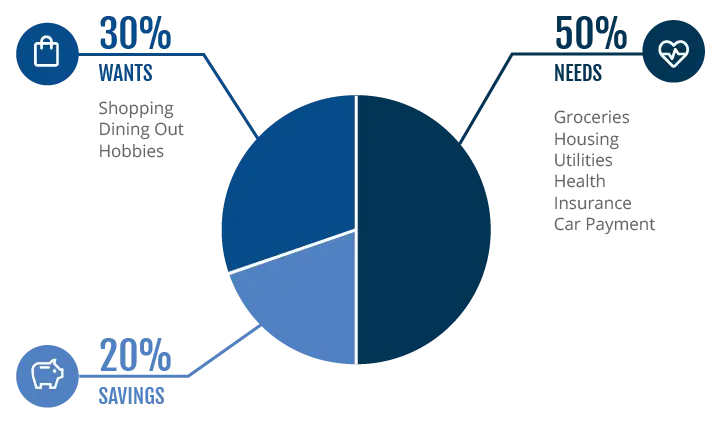
The 50/30/20 rule is a simple way to learn how to make a budget, take control of your finances, and increase your savings by managing your post-tax income. In the 50/30/20 rule, 50% of your after-tax income goes to needs, 30% to wants, and 20% to financial goals, such as saving or paying off debt.
Raisin works with partner banks that are part of their respective country’s deposit guarantee scheme. Each bank protects eligible deposits up to €100,000 per person, per bank under its national deposit guarantee scheme, as required by EU law.
With Raisin’s savings plan, you can set up regular, automated transfers from your current account into a demand deposit account, helping you build your savings consistently each month. By automating your savings, you make sure your goals stay on track, even when life gets busy.
Start automating your savings today.

© 2026 Raisin Bank AG, Frankfurt a.M.

All interest rates displayed are Annual Equivalent Rates (AER), unless otherwise explicitly indicated. The AER illustrates what the interest rate would be if interest was paid and compounded once a year. This allows individuals to compare more easily what return they can expect from their savings over time. Raisin Bank, trading as Raisin, is authorised/licensed or registered by BaFin (Bundesanstalt für Finanzdienstleistungsaufsicht) in Germany and is regulated by the Central Bank of Ireland for conduct of business rules.


