
How can you invest €50k in Ireland?
Explore different options for investing €50k.
Wondering how best to invest €50,000 in Ireland? Investing a large lump sum can help you plan for long-term growth and financial stability. Whether you’re a first-time saver or looking to diversify your investments, on this page, we’ll explore accessible savings options available in Ireland, including savings accounts, mortgages, and pensions, that may help you grow your lump sum.
While this guide focuses on ways to invest €50k, many of the principles and options discussed also apply if you’re considering the best way to invest €100k in Ireland.
Key takeaways
While there isn’t one best way to invest €50k in Ireland, some people might look into secure, low-risk savings options and diversifying across asset classes
It can help to work out priorities for a lump sum, whether that’s building an emergency fund or paying off high-interest debt, before committing to longer-term investments
Understanding your risk tolerancecan help you decide the best way to invest €50,000 for your needs. Some people may be comfortable balancing products like savings accounts with higher-risk investment opportunities
The information provided here is for informational and educational purposes only and does not constitute financial advice. Please consult with a licensed financial adviser or professional before making any financial decisions. Your financial situation is unique, and the information provided may not be suitable for your specific circumstances. We are not liable for any financial decisions or actions you take based on this information.
Where to invest €50k in Ireland
Investing €50k in Ireland offers a range of opportunities, but as always, the best approach for you will depend on your financial goals, risk tolerance, and investment timeline. Those who prioritise security and consistent returns might consider adopting a savings and investment strategy that accounts for different risk levels. This might involve using €50k (or part of it) for savings accounts and pension contributions.
If you’re wondering about the best ways to invest €50k in Ireland and are unsure where to begin, you may wish to consult with a financial adviser, who can give you tailored advice on how to create an investment plan that works with your personal circumstances. Let’s look at some options.
1. Prepare for the future
Before you start investing €50,000, it’s important to ensure your financial foundations are in place. That could mean paying off any high-interest debt and building an emergency fund that will cover 3-6 months of living expenses. Having the essentials covered can provide peace of mind and also put you in a stronger position to decide what to do with any money you have left over.
Some people like to use budgeting strategies to guide their financial planning. One option is the 50/30/20 rule, which suggests 50% of your income goes towards essentials, 30% towards wants or lifestyle, and 20% for savings or debt repayment. With a structured approach like this, you may be in a better position to make the most of your €50,000 by planning how and where to save.
2. Open a savings account
Savings accounts offer a flexible way to grow a lump sum of money, with fixed rate accounts offering a guaranteed return for a set term. Unlike other investment types, deposit-protected savings accounts carry relatively low risk, with savings accounts under the Irish Deposit Guarantee Scheme (or the relevant national deposit guarantee scheme within the EU) protected up to €100,000, per person, per institution. Options include:
Term deposit accounts: With a term deposit, you agree to lock a lump sum away for a set period – typically ranging from a few months to several years – in exchange for a fixed interest rate. Term deposits typically offer a higher rate of interest than other savings account types, but you won’t have access to your funds until the end of the term. Savers must be comfortable with locking away their funds for a period of time, but, in return, they receive predictable returns.
Demand deposit accounts: Also known as easy-access savings accounts, demand deposit accounts allow you to withdraw funds and top up your balance at any time. While they may offer a lower interest rate compared to fixed-term options, they might suit someone looking for flexibility and easy access to their money. The interest rate is variable, so it can go up or down at any time.
Savings bonds: Similar to term deposits, these are long-term savings products that are backed by the Irish government, offering a fixed return over a set period. Savings bonds typically have longer terms than term deposits (usually between three and seven years), with your funds locked in until maturity.
Of course, some people investing €50k may choose to split up the amount into different savings account types to give themselves more flexibility. With Raisin, you can access a range of savings accounts with competitive interest rates from banks across Europe.
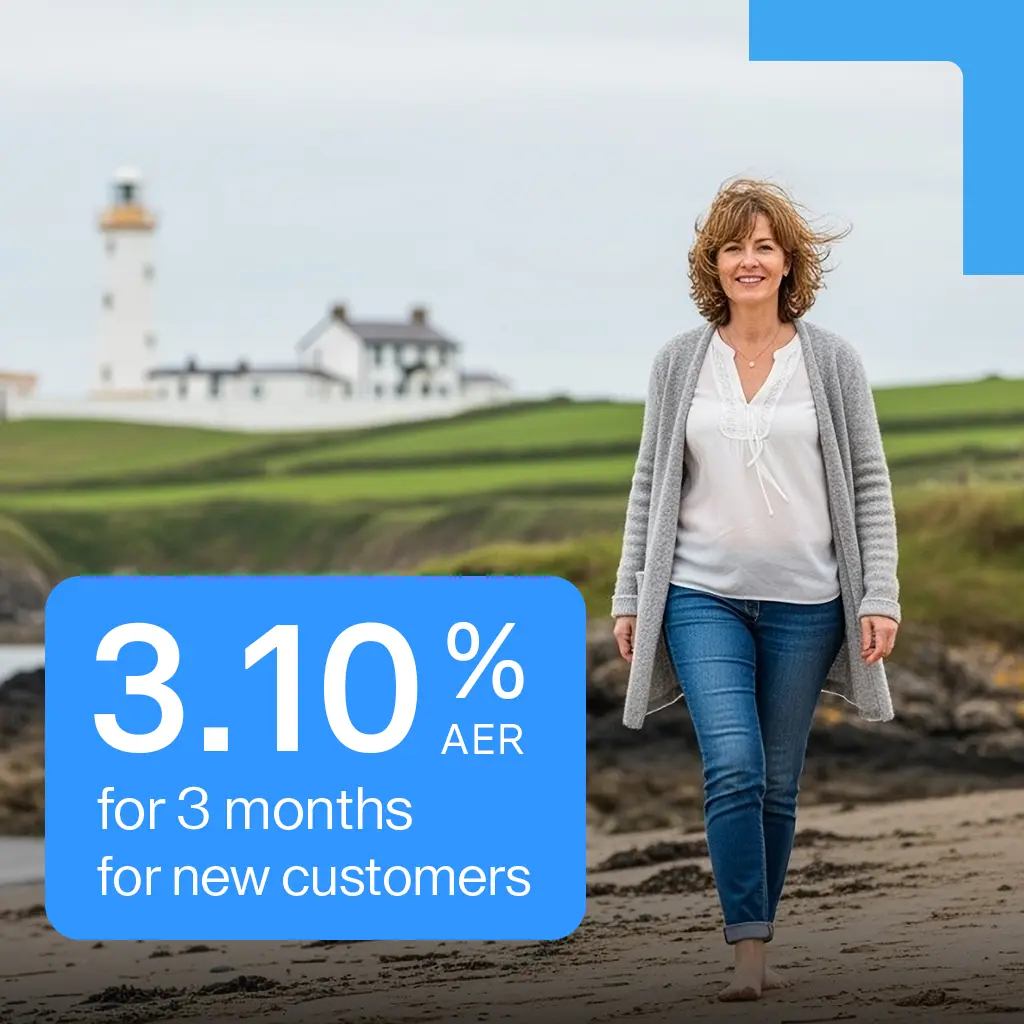
Raisin Starter Account
Put your cash to work with a secure, high-yield savings account. Open in minutes, deposit from €1, and earn a fixed 3.10% AER over three months. Enjoy full flexibility to add or withdraw funds at any time, with no fees. At the end of the term, you can seamlessly move your balance to another savings account through Raisin. All deposits are protected up to €100,000 per person, per bank under the German Deposit Guarantee Scheme.
3. Use an online savings platform
Online savings platforms, as well as online or digital-only banks, have transformed how Irish savers access interest rates. Because their overhead costs tend to be lower than brick-and-mortar institutions, savers may be able to access more competitive returns with online savings platforms.
Online savings accounts and platforms like Raisin also offer the benefit of being able to open, manage, and monitor your savings at any time, with no need to visit a branch. With just a few clicks, you can easily compare rates across multiple institutions, including European banks, and choose the best option for your savings goals.
4. Use it towards a mortgage or property
Property might be another consideration for those looking for the best way to invest €50k in Ireland. Options include:
Buying a property: A €50,000 deposit could help you get on the property ladder in Ireland, and a larger deposit may mean more favourable mortgage terms and lower interest rates, making homeownership more affordable in the long run.
Paying off an existing mortgage: If you already own a home, investing €50k to reduce your mortgage principal can lower your monthly repayments and reduce the total interest paid over time, improving your overall financial position.
- Investing in a second property for rental income: Alternatively, there is the option of investing €50k in a second property to generate rental income. This approach offers potential for regular cash flow and capital appreciation, but requires careful consideration of property management, market conditions, and other costs.
5. Save into your pension
If you’re thinking longer-term, you might contribute €50,000 to a Personal Retirement Savings Account (PRSA). Any contributions to a PRSA receive tax relief at your marginal rate, meaning you effectively end up investing more than the amount you contribute. Your pension savings grow on a tax-deferred basis, meaning you don’t pay tax on investment growth until you withdraw from your retirement fund.
Keep in mind, though, that pensions are designed for long-term security, with access usually only available at retirement age. However, investing in a pension not only helps prepare financially for your future life, but it can also reduce your current tax burden.
The information provided here is for informational and educational purposes only and does not constitute tax advice. You should consult with a qualified tax professional or adviser regarding your individual tax situation. Tax laws and regulations are complex and subject to change, and the information provided may not be applicable to your specific circumstances. We are not liable for any tax decisions or actions you take based on this information.
6. Consider investment products
Investment products such as stocks, ETFs, or mutual funds can also form part of a long-term financial plan. These options offer the potential for higher potential returns over time, but they also carry investment risk, and values can rise or fall.
Tax matters: Tax treatment depends on the product and your circumstances. In Ireland, gains on shares are generally subject to 33% Capital Gains Tax (CGT). Certain funds/ETFs can fall under the Irish exit tax regime (currently 38% from 1 January 2026) and may be subject to an 8-year “deemed disposal” charge even if you don’t sell. Investments domiciled outside Ireland may also be subject to source-country withholding taxes (e.g., on dividends) and may involve additional Irish tax reporting requirements.
Savings in Europe with Raisin
You may be wondering where to invest or save. With a Raisin Account, you’ll gain access to a wide range of European banks offering competitive interest rates that are not always available locally.
Once you’re registered, our platform lets you compare and apply to open high-interest, deposit-protected savings accounts from beyond Ireland. No fees, no paper forms – and you can manage everything through one login.

Company & team
Savings accounts
Information
Company & team
Savings accounts
Information
© 2026 Raisin Bank AG, Frankfurt a.M.

All interest rates displayed are Annual Equivalent Rates (AER), unless otherwise explicitly indicated. The AER illustrates what the interest rate would be if interest was paid and compounded once a year. This allows individuals to compare more easily what return they can expect from their savings over time. Raisin Bank, trading as Raisin, is authorised/licensed or registered by BaFin (Bundesanstalt für Finanzdienstleistungsaufsicht) in Germany and is regulated by the Central Bank of Ireland for conduct of business rules.